Last updated 2026-08-18
TL;DR
Arizona does not license or renew digital court reporters. The Arizona Supreme Court certifies only stenographic reporters who use machine shorthand, leaving digital reporters free to work without a state credential. However, many digital reporters pursue national certification through AAERT, which requires recertifying every three years with continuing education credits and fees. Without a state mandate, renewal is voluntary but can signal competence to clients and courts.
Do You Need a License for Digital Court Reporter in Arizona?
No. Arizona has no licensing or certification requirement for digital court reporters. The Arizona Supreme Court’s Court Reporter Certification program applies exclusively to stenographic reporters. As the certification page states plainly: “Arizona certifies court reporters who use machine shorthand.” [1] That omission means you can begin working as a digital court reporter in Arizona without applying for any state permit, paying a licensing fee, or passing a state exam.
This lack of regulation is common in many states, but Arizona is particularly clear: if you do not use a stenographic machine, you do not fall under the state’s court reporter certification umbrella. Digital court reporters who use high-quality recording equipment and transcription software are free to offer freelance deposition or legal transcription services without state approval.
How Does Arizona Define Court Reporting and Why Digital Doesn’t Fit
Arizona Supreme Court Rule 31 defines a “Certified Reporter” as someone who has met the requirements of the board and who “uses machine shorthand.” [2] The board oversees the Registered Professional Reporter (RPR) exam and other traditional stenographic credentials. At the same time, Rule 28.1(b) allows courts to use electronic recording equipment as an alternative to a live court reporter. [3] But that rule creates no path to certify the operators of that equipment; it simply authorizes the method.
The upshot is that the state’s reporting framework sees a sharp line between shorthand and electronics. Digital reporting sits outside both worlds: you are not a Certified Reporter, and you are not required to be one to record depositions or transcribe proceedings for parties outside the courtroom. That’s why there’s no state renewal process for digital reporters. The state’s certification machinery doesn’t extend to you in the first place.
If Arizona Doesn’t Require a License, Is There Any Renewal at All?
There is no state-mandated renewal, but that doesn’t mean digital court reporters operate in a vacuum. The closest thing to a renewal requirement comes from national certification bodies, primarily the American Association of Electronic Reporters and Transcribers (AAERT). AAERT’s Certified Electronic Reporter (CER) credential must be renewed every three years. To renew, you must earn 3.0 continuing education units (CEUs) from approved providers and pay a recertification fee. [5]
So while Arizona won’t send you a renewal notice or revoke a nonexistent license, AAERT will if you hold their certification and fail to meet the deadline. Many court reporting agencies in Arizona look for AAERT certification when hiring, so staying current with CEUs is effectively your replacement for state renewal.
How Much Does It Cost to Start and Operate as a Digital Court Reporter in Arizona?
Because there’s no state fee structure, your costs break down into training, equipment, and optional certification. A typical digital court reporting course, such as the self-paced program from BlueLedge, costs $1,495. [8] Equipment, a reliable digital recorder, laptop, headphones, and transcription software, runs between $1,200 and $4,000 depending on quality.
If you pursue AAERT certification, the exam fee is $200 for members and $350 for non-members. [4] Annual AAERT membership adds $150. That brings the total initial investment for someone starting fresh to roughly $1,500 to $6,350. One‑time materials like the Digital CSR Path Kit cost $199 and cover templates, guides, and equipment checklists, which can trim the learning curve for new digital reporters.
For ongoing operations, expect to budget AAERT renewal fees (currently $150, $250 every three years) and any CEU course fees, though many free webinars qualify. There is no Arizona state tax or licensing surcharge.
How Long Does It Take to Become a Working Digital Court Reporter in Arizona?
Without a state licensing bottleneck, the timeline depends on your training pace and whether you pursue AAERT certification. Most students complete a digital reporting course in 4 to 8 months. BlueLedge’s program, for instance, is designed to be finished in six months with part-time effort.
To sit for the AAERT CER exam, you must be at least 18, hold a high school diploma or equivalent, and have completed a digital reporting training program or have two years of professional experience. [6] After finishing coursework, plan on 2 to 3 additional months to prepare for and schedule the practical exam. So the realistic path from zero to AAERT‑certified, job‑ready reporter is 6 to 18 months.
Maintaining AAERT Certification: CEU Requirements and Renewal Deadlines
If you hold the AAERT CER, your three‑year recertification cycle begins on the date your original certification was awarded. You need 3.0 CEUs, which equates to roughly 30 contact hours of approved continuing education. These can include AAERT conferences, approved webinar programs, and some college courses related to legal technology or transcription. [5]
You must also submit a recertification application and fee (typically $150 for members, $250 for non-members) before your expiration date. There is a 30‑day grace period after expiration, but during that time your certification is considered inactive. Missing the deadline means losing the credential and having to retake the exam. Arizona reporters who rely on AAERT for credibility should set calendar reminders; the state won’t remind you.
How Does Arizona’s Digital Court Reporter Landscape Compare to Other States?
Arizona’s hands‑off approach contrasts sharply with states that have explicit digital reporter renewal requirements. For example, Alabama requires notarization and an annual certificate renewal with the state board. Alaska operates a similar system tied to its court rules. California and Florida have rigorous court reporter boards that impose continuing education and fee renewals on both stenographic and, in some roles, digital reporters. Georgia and Illinois also have structured renewal cycles for court reporters, though digital specifics vary.
In Arizona, you get the advantage of no bureaucracy, but you lose the automatic trust that a state‑issued credential can bring. That’s why many Arizona digital reporters voluntarily pursue AAERT certification, it’s the portable equivalent of a state license in states that don’t regulate the digital niche.
What Equipment and Software Do You Need to Get Started?
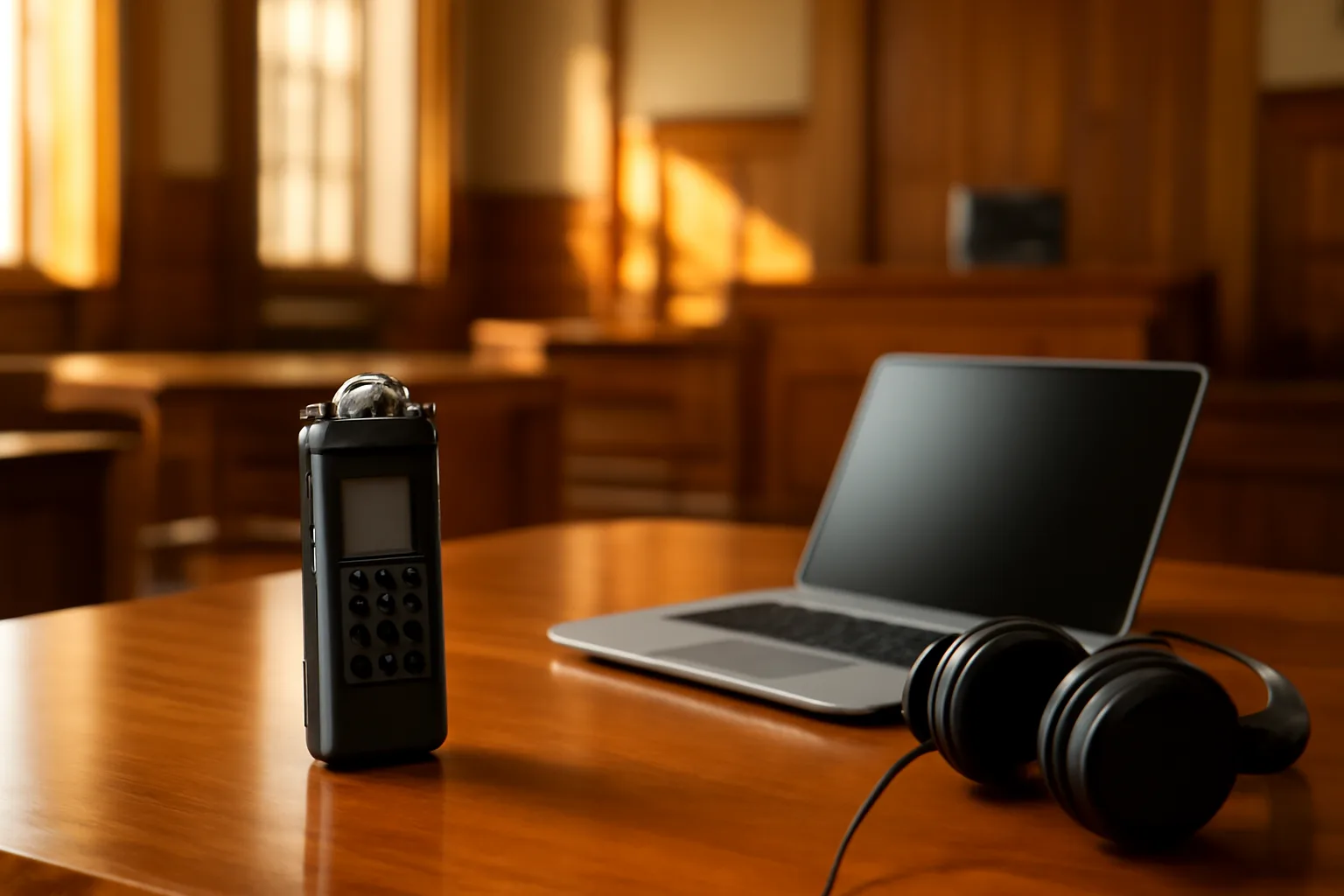
No Arizona statute dictates which gear you must use. But to compete in the deposition market, you need a professional‑grade digital audio recorder with multiple microphones, a laptop with sufficient RAM to handle large audio files, a comfortable headset, and transcription software that supports time‑stamping and playback control. Many reporters also invest in a foot pedal for hands‑free playback while transcribing.
Typical setups start around $1,200 for a basic kit and can exceed $4,000 if you opt for premium multitrack recorders and noise‑canceling accessories. The DigitalReporterPath kit includes a checklist of recommended equipment models that meet working‑reporter standards. Because you avoid state licensure paperwork, you can put the saved money directly into better audio fidelity, which is often what gets you hired over competitors.
Next Steps: Building Your Career Without State Licensing Hurdles
Arizona’s lack of digital court reporter regulation is a double‑edged sword. You face zero state red tape, zero renewal fees, and zero mandatory continuing education, but you also have to prove your competence entirely on your own. The smoothest path is to complete a recognized training program, obtain AAERT certification, and assemble a reliable equipment rig.
Check local court policies in Maricopa County and Pima County, as individual judges may have preferences for reporting methods in their courtrooms. For deposition work, private agencies rarely ask about state certification; they ask if you’re AAERT‑certified and what your audio backup procedures are. Invest in both, and you’ll be well positioned. The lack of a state renewal requirement never needs to hold you back.
Frequently asked questions
Do you need a license for digital court reporter in Arizona?
No. Arizona does not certify, license, or renew digital court reporters. The state’s court reporter certification program covers only stenographic reporters who use machine shorthand. Digital reporters are free to work without any state-issued credential.
How much does digital court reporter cost in Arizona?
With no state fees, total startup cost ranges from about $1,500 to $6,350. That includes a training course (e.g., BlueLedge at $1,495), equipment ($1,200, $4,000), and optional AAERT exam ($200 member, $350 non-member) plus annual membership ($150). Ongoing costs center on AAERT recertification every three years.
How long does digital court reporter take in Arizona?
Expect 6 to 18 months from start to earning AAERT certification and landing your first gig. A digital reporting course typically takes 4 to 8 months, then add 2 to 3 months for exam prep. The state imposes no mandatory waiting period, so the pace is up to you.
Is AAERT certification required to work as a digital court reporter in Arizona?
No, it’s entirely optional. Because Arizona doesn’t regulate digital reporters, you can accept work without any certification. However, many private agencies and law firms prefer or require AAERT’s CER credential, so obtaining it often leads to more bookings and higher rates.
How often do I need to renew my AAERT certification?
Every three years. The recertification cycle starts from your original certification date. You must earn 3.0 CEUs, submit an application, and pay a fee (typically $150 for members, $250 for non-members) before the expiration. A 30-day grace period is available, but certification becomes inactive during that window.
What CEU activities are accepted for AAERT recertification?
AAERT accepts CEUs from their own conferences and webinars, approved online courses, college coursework in legal or transcription fields, and sometimes presentations or publications you produce. A detailed list of approved providers is maintained on the AAERT recertification page. Free options exist, so you don’t have to spend much to maintain certification.
Are digital court reporters allowed in Arizona superior courts?
Superior courts typically use certified stenographic reporters for realtime proceedings, but electronic recording is authorized under Rule 28.1(b). Digital reporters are not barred from transcribing recorded proceedings or working in deposition settings outside the courtroom. Check with the specific court in Maricopa or Pima County for any preferences.
Can I take an online digital court reporting course and start working in Arizona right away?
Yes. Since Arizona has no licensure or registration, you can complete an online program and immediately offer services. Many successful digital reporters in the state began with self-paced online courses. Just be prepared to demonstrate your skills to clients, since no state agency vouches for you.
What's the difference between a digital reporter and a stenographic reporter in Arizona?
A stenographic reporter is a state‑certified professional who uses a stenotype machine and has passed the RPR or similar exam. A digital reporter uses audio recording equipment and transcribes from the recording. Arizona only certifies the former; digital reporters operate outside that regulatory framework.
Are there any county-level rules for digital reporters in Arizona?
No county in Arizona has its own digital reporter licensing scheme. Individual judges or court divisions may set preferences for electronic recording or transcription services, but these are procedural, not legal requirements. Always ask the contracting firm or court coordinator before a deposition or hearing.
How much does AAERT certification cost in total?
The CER exam costs $200 for AAERT members and $350 for non-members. Membership itself is $150 annually. If you join and pass on your first attempt, your first-year cost is $350. Recertification every three years adds $150 for members. You can view current fees on the AAERT exam fees page.
Where can I find digital court reporter jobs in Arizona?
Most digital reporting work comes through national and regional deposition agencies that have a presence in Phoenix, Tucson, and other cities. Websites like Indeed and LinkedIn list openings. Networking with local paralegal associations and joining AAERT’s member directory also opens doors, since many firms search for certified digital reporters directly.
Sources
- Arizona Supreme Court Certification of Court Reporters page: “Arizona certifies court reporters who use machine shorthand.”
- Arizona Supreme Court Rule 31 (Certification of Court Reporters): Defines a Certified Reporter as one who uses machine shorthand and has passed the required examination.
- Arizona Supreme Court Rule 28.1 (Record of Proceedings): Permits courts to use electronic recording equipment as an alternative to a stenographic court reporter.
- AAERT Exam Fees page: AAERT CER exam costs $200 for members and $350 for non-members.
- AAERT Recertification page: AAERT certification requires 3.0 CEUs and a renewal fee every three years.
- AAERT Eligibility page: Applicants must complete a digital reporting training program or have two years of professional experience.
- Arizona Administrative Office of the Courts Electronic Court Recording page: The AOC offers an electronic recording program for court employees, but does not extend certification to private digital reporters.
- BlueLedge Digital Court Reporting Certificate course page: Tuition for the self-paced digital court reporting course is $1,495.