Last updated 2026-08-18
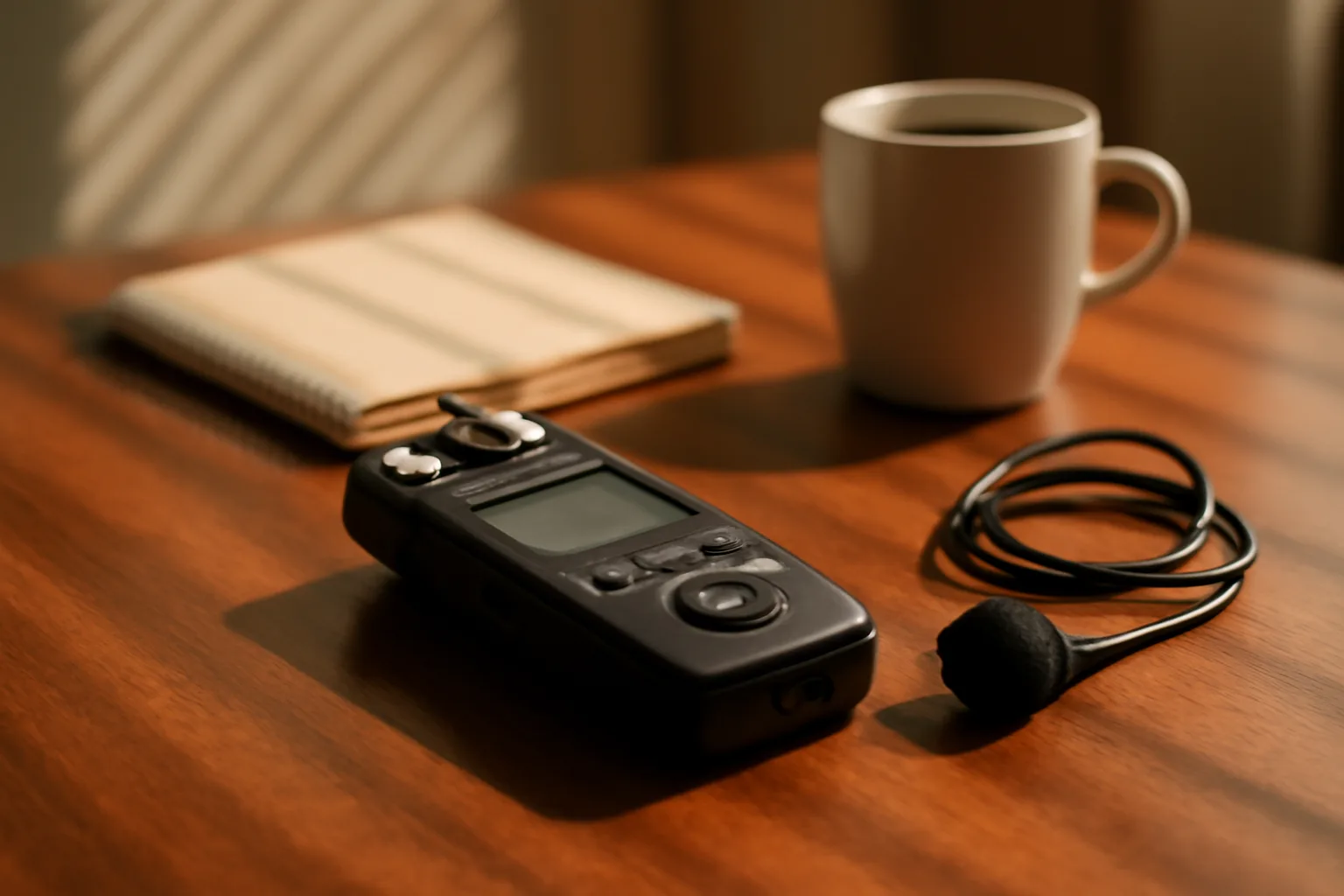
TL;DR
California does not license digital court reporters, and digital recording cannot make the official record in state courts without a CSR license. You can still work as a deposition digital reporter or in federal settings. Expect to spend $3,000 to $7,000 on training, equipment, and certification. Most people finish training in 2 to 6 months.
Do you need a license for digital court reporter in California?
No. There is no California “digital court reporter” license. The Court Reporters Board of California licenses only Certified Shorthand Reporters, or CSRs. Its enabling statute, Business and Professions Code § 8000 to 8037, names “shorthand reporting” and the CSR credential as the sole method for making the official record in state courts [1][2].
The Board’s FAQ page is blunt: “digital recording is not a permissible method for making the official record in California state courts unless authorized by law” [1]. A purely digital reporter cannot walk into a California Superior Court and build the record. You have to hold a CSR license, which you earn by passing the three-part dictation and written exam.
Here is where the actual work lives. Most digital court reporters in California never try to work inside a state courtroom. They take depositions, handle federal administrative hearings, or work for agencies where digital reporting is accepted. Those jobs need no CSR. What they need is a solid grasp of the technology, a reliable setup, and often a notary public commission (California treats a deposition officer as someone who can swear in witnesses, and a notary commission satisfies that) [3].
See “digital court reporter California” in a job listing and the employer almost certainly means someone who uses digital recording to capture testimony in a deposition, not a courtroom official. That path has no licensing board, no state test, and no fee to the California Court Reporters Board.
How much does digital court reporter cost in California?
A safe, all-in startup budget sits between $3,000 and $7,000. The money splits three ways: training, certification exams, and equipment plus software. Compare that with the stenographic CSR path, which runs $15,000 to $40,000 in tuition alone and takes two to four years [4].
Training runs $500 to $1,500. Online programs like BlueLedge’s digital reporter curriculum cost roughly $1,195 and run 12 to 16 weeks [5]. Certification exam fees from the American Association of Electronic Reporters and Transcribers, or AAERT, top out around $500. AAERT charges $125 per exam for members and $250 for non-members, and you pass a written knowledge test plus a practical skills test [6].
Equipment is the heaviest line. A professional-grade digital recorder like the Sony PCM-A10 costs about $248 [7]. Add a laptop ($800 to $1,500), a high-quality external microphone ($100 to $300), noise-isolating headphones ($80 to $150), and transcription software ($0 to $300 if you start on a free tier). Toss in a backup recorder, cables, and cases, and the gear total lands around $2,000 to $5,000.
One more fee: a California notary public commission. The application costs $40, plus a $10,000 to $15,000 surety bond that runs roughly $50 to $100, plus supplies. Plan on $75 to $150 [8].
What you will not pay is a state license application or renewal fee for “digital court reporter.” No such line item exists. The board does not issue the credential.
What goes into your startup budget? A cost breakdown
Here is how the money usually breaks out for someone entering the field fresh:
| Category | Low Estimate | High Estimate | Notes |
|---|---|---|---|
| Training | $500 | $1,500 | Online programs; self-paced study reduces the low end |
| AAERT CER exams | $250 | $500 | Two exams; member pricing cuts the cost |
| Recorder and mics | $350 | $600 | Sony PCM-A10 or equivalent, plus a lavalier mic |
| Laptop | $800 | $1,500 | Refurbished business laptops land in the middle |
| Accessories and software | $250 | $600 | Headphones, cables, backup gear, transcription tools |
| Notary public commission | $75 | $150 | Bond, filing, and supplies |
| Total | $2,225 | $4,850 | Many people land around $3,000 to $5,000 |
The biggest variable is how fancy you go with your recording rig. Already own a fast laptop and a decent pair of headphones? You can trim $1,000 off the top. The $199 Digital CSR Path Kit from DigitalReporterPath saves you hours of paperwork scrambling by bundling state-specific forms and checklists, but it does not replace training or equipment.
How long does digital court reporter take in California?
Two to six months, part- to full-time. The spread depends on your prior know-how and how hard you push through a training program.
A structured online course like the one from BlueLedge lasts 12 to 16 weeks if you follow the syllabus week by week [5]. Some students finish in 60 days. Others stretch it across four months. That timeline covers digital recording procedure, annotation, exhibit handling, read-back protocols, and an overview of legal terminology. It does not make you an expert witness handler. You build that on the job.
AAERT certification adds time. After training, you still register for the written and practical exams, study, and wait for testing windows. Plan four to eight weeks between finishing training and test day. Pass both on the first try and add another two weeks for results to post. That pushes the total to roughly five or six months for someone moving at a steady clip.
The stenographic CSR route asks for a minimum of 2.5 years of full-time court reporting school and a punishing dictation test. For a digital reporter focused only on depositions, the speed advantage is enormous.
What equipment do you need to start as a digital reporter?
You need gear that captures courtroom-quality audio and lets you mark exhibits cleanly. The must-have pieces:
A professional stereo recorder with onboard redundancy. The Sony PCM-A10 records to internal memory and a microSD card at the same time. You never want to lose a file. External lavalier microphones give better witness pickup, and a shotgun-style boundary mic handles a conference room table [7].
A modern laptop running Windows or macOS. You run digital reporting software (FTR, ForTheRecord, or one of the AAERT-recognized annotation platforms) alongside a foot pedal for playback. Eight gigabytes of RAM and a solid-state drive are the floor.
Noise-isolating headphones help you catch soft-spoken witnesses during readback. A backup handheld recorder, extra batteries, and a hard case round out the kit. Expect to spend $2,000 to $5,000 buying it all new. Many reporters start with less and upgrade after the first few jobs.
Can you work as a digital court reporter in California courts?
Not for the official record in a California Superior Court. The Court Reporters Board is clear: only a licensed CSR can use a stenographic or voice-writing machine to produce the verbatim transcript that becomes the court’s official record. Digital recording is not an equivalent method under California law [1][2].
Some limited-jurisdiction courts do use electronic recording with supervision, but those are not jobs a freelance digital reporter walks into off the street. They are usually staff positions using fixed courtroom recording systems. Even then, the operator may need a CSR if the recording will build an official transcript.
Federal courts run differently. The Administrative Office of the U.S. Courts allows digital audio recording in certain proceedings, and a digital reporter who holds an AAERT certification may qualify. Those jobs are competitive, but they exist in California’s federal districts. Your daily work, though, will almost certainly come from deposition suites and law firms, not the Santa Monica courthouse.
Where can digital court reporters actually work in California?
Most of the work sits in the private sector: law firm depositions, workers’ compensation hearings, unemployment insurance appeals, and corporate board meetings. Any proceeding where the attorneys agree to a digital recording and no statute requires a certified transcript is fair game.
Many digital reporters work as independent contractors for court reporting firms like Veritext, U.S. Legal Support, or smaller regional agencies. These firms send you to a law office with your recording rig. You swear in the witness (hence the notary commission), record the proceeding, mark exhibits, and later produce a transcript from the audio file.
Government agencies that run their own administrative hearings, like the California Unemployment Insurance Appeals Board, sometimes use digital audio recording. A posting will occasionally ask for a “hearing reporter” rather than a CSR. Public utilities commissions and school district hearings follow the same pattern. None of these jobs require a California CSR license, though they may want an AAERT certification or equivalent [6].
How does the stenographic CSR path compare in cost and time?
Go the traditional route and you are chasing a CSR license, not a digital role. That path costs far more. Court reporting schools in California charge $12,000 to $40,000 in total tuition. Because you master stenographic theory and pass a 200-word-per-minute dictation test, most students need two to four years of full-time study [4].
The CSR exam itself costs $85 for the dictation portion and $85 for the written portion. Passing candidates then pay a $200 initial license fee to the Court Reporters Board. Keeping the license runs $200 every two years, plus continuing education [2].
For someone who wants to enter the deposition world fast, the steno path is overkill. A digital reporter can be working and billing within six months for less than $7,000 all-in. The trade-off: a CSR can work in any California courtroom and command a higher deposition rate, often $5.00 to $6.00 per page versus $3.00 to $4.00 for digital. Both figures come from rate surveys by the National Court Reporters Association [4].
The choice comes down to where you want to sit. Courtroom official or deposition freelancer.
The $199 paperwork shortcut for California digital reporters
State licensing does not exist, but the stack of forms you face as a new business owner does: city business tax certificates, an IRS Employer Identification Number, a California seller’s permit if you sell transcripts directly, and the notary packet. Trying to book your first deposition while chasing all that paperwork feels like a second job.
DigitalReporterPath built a one-time $199 Digital CSR Path Kit that bundles those California-specific forms with fillable templates and a step-by-step checklist. It is not a training program, and it will not teach you how to run audio. It solves the administrative headache so you can focus on getting a clean recording. Comfortable Googling forms and sitting at the county clerk’s window for an afternoon? You probably do not need it. Want to ship the business paperwork in a weekend? The kit earns its price.
Never pay anyone who claims you must “register” as a digital court reporter with the state. There is no registration, no roster, and no fee owed to Sacramento for that title.
Are there ongoing costs after you start?
Yes, but they are modest next to the startup hit. You replace microphones and cables as they wear, upgrade your laptop every three to five years, and pay for transcription software subscriptions (around $30 to $60 a month for a professional plan).
Carry AAERT certification and renewal costs $100 every two years for members, $150 for non-members [6]. You also complete 3.0 continuing education units within that cycle. Attending a state or national digital reporting conference covers most of the CE requirement.
Your California notary commission renews every four years. The renewal cost is roughly the same as the first go: $40 to the Secretary of State, plus a new bond.
Work as an independent contractor and you should set aside 25 to 30% of gross earnings for self-employment tax. That is not a license fee, but it is the single biggest ongoing cost of working for yourself, and new digital reporters routinely underestimate it.
Is AAERT certification worth it for a California digital court reporter?
For most people, yes. No California law requires AAERT certification, but the agencies that hand you work often do. U.S. Legal Support, Veritext, and several large court reporting firms list the Certified Electronic Reporter, or CER, credential as a preferred qualification for digital reporters [6].
Federal court pilot programs in California prefer it too. The Administrative Office of the U.S. Courts asks that operators of digital audio recording be trained and certified by a nationally recognized organization, and AAERT is the largest.
Passing the CER exams forces you to learn the procedural knowledge you need on day one: how to log exhibits, how to handle an off-the-record request, how to produce a clean transcript from a multi-track recording. The $250 to $500 you spend on the exams is cheap next to losing a client because you did not check your backup when the primary file glitched.
If you plan to work for a single firm that trains you on the job, you can skip the CER at first. You will want it eventually. The market rewards the credential.
What about a notary public commission? Is it required?
Strictly speaking, California law does not require you to be a notary to record a deposition. But working as a deposition officer without one is near-impossible. The attorney hands you the oath and expects you to administer it to the witness. The cleanest way to meet that expectation is a current California notary public commission [3].
You can become a notary in about four to six weeks. You attend a six-hour approved course, pass a background check, take a state-proctored exam, and file the bond and oath with your county clerk. The whole process costs roughly $100 to $150, including the $40 state filing fee [8].
Some digital reporters skip the notary step and let the attorney stipulate to an unsworn statement under penalty of perjury. That approach risks alienating the law firms that pay your invoice. Every working California digital reporter I know carries an active notary commission. Treat it as a mandatory startup step.
Next steps once you are ready to launch in California
The sequence that gets you from zero to invoicing clients: Enroll in a digital court reporter training program that runs 8 to 16 weeks. While you train, apply for your notary commission. Order your base gear (recorder, laptop, headphones). Practice recording mock depositions with a friend until you can produce a clean transcript in under three times the length of the audio.
Once coursework ends, register for the AAERT written knowledge exam. Pass it, then take the practical skills test. While you wait for results, file your city business license and, if you plan to sell transcripts directly, register for a seller’s permit through the California Department of Tax and Fee Administration.
Then contact five court reporting agencies and tell them you are a newly certified CER with your notary commission in hand. You will likely start on a small workers’ comp deposition at $200 to $250 per day. Build from there. The whole timeline runs as slim as 10 weeks and as realistic as six months. No state board to petition, no multi-year wait, no CSR exam.
Want a one-and-done folder with all the forms and checklists for the business setup? The Digital CSR Path Kit does that for a flat $199. It will not speed up your audio skills, but it removes the “where do I even file this?” obstacle that stalls a lot of people in their first month. You can learn more about the kit at /start.
Frequently asked questions
Do you need a license for digital court reporter in California?
No. The Court Reporters Board of California licenses only Certified Shorthand Reporters. No “digital court reporter” license exists in the state code. To make the official record in a California Superior Court, you must hold a valid CSR license. For deposition work, no state license exists; you typically need a notary commission and, often, an AAERT certification.
How much does digital court reporter cost in California?
Total startup costs usually fall between $3,000 and $7,000. That covers training ($500 to $1,500), AAERT certification exams ($250 to $500), a professional audio recorder and laptop ($2,000 to $5,000), and a notary public commission ($75 to $150). There is no state license fee because California does not issue a digital court reporter credential.
How long does digital court reporter take in California?
Training programs run 8 to 16 weeks. Add AAERT exam registration, study time, and a testing window, and expect 4 to 6 months total from start to fully ready. Some people land their first simple deposition within 10 weeks if they already own the equipment and move fast on the notary commission.
What’s the difference between a digital court reporter and a stenographer in California?
A stenographer uses a shorthand machine to capture every spoken word in real time and must hold a CSR license to work in California courts. A digital court reporter uses professional audio recording equipment and typically works in depositions, not courtrooms. The digital path costs far less upfront and takes months, not years.
Can a digital reporter make the official record in a California courtroom?
No. California law does not allow digital recording to serve as the official court record. Only a licensed CSR may produce the official transcript. The Court Reporters Board states plainly that digital recording “is not a permissible method for making the official record in California state courts unless authorized by law.”
Do I need to be a notary public to take depositions as a digital reporter?
Technically no, but practically yes. Attorneys expect you to administer the oath, and a notary commission gives you that authority. Most deposition firms will not hire a digital reporter who cannot swear in a witness. Plan on spending roughly $100 to $150 and 4 to 6 weeks to get your commission.
What equipment is required to start digital court reporting?
Minimum kit: a professional stereo recorder with backup recording (e.g., Sony PCM-A10, about $248), a reliable laptop ($800 and up), noise-isolating headphones ($80 to $150), and a good external microphone ($100 to $300). Add annotation software, a foot pedal, and backup batteries, and your total likely reaches $2,000 to $5,000.
How do I get certified as a digital court reporter?
Take the AAERT Certified Electronic Reporter (CER) exams: a written knowledge test and a practical skills test. Both are offered at testing centers and online. Fees run $125 to $250 per exam depending on membership status. AAERT certification is the most recognized credential for digital deposition reporters.
Is the AAERT certification required in California?
No state law mandates it. Major court reporting agencies and federal court pilot programs in California strongly prefer or require it, though. AAERT certification signals to law firms and agencies that you have met baseline professional standards for digital reporting.
How much can I earn as a digital court reporter in California?
Entry-level digital deposition reporters often earn $200 to $300 per diem for half-day depositions. Experienced reporters who produce their own transcripts can gross $60,000 to $85,000 a year full-time. Page rates for digital-origin transcripts typically run $3.00 to $4.00 in the California market, versus $5.00 and up for CSR-origin transcripts.
Are there any ongoing fees after starting?
Yes: AAERT certification renewal ($100 to $150 every two years plus 3.0 CEUs), notary commission renewal ($40 plus bond every four years), transcription software subscriptions ($30 to $60 a month), and equipment maintenance. There is no state digital court reporter license renewal fee because no license exists.
What’s the fastest way to get started as a digital court reporter in California?
Buy a Sony PCM-A10 recorder, enroll in a 12-week online digital reporting program, and apply for your notary commission at the same time. As soon as the course ends, register for the AAERT CER written exam. With dedicated effort, you can be booking work in 10 to 14 weeks.
Sources
- Court Reporters Board of California FAQ: Digital recording is not a permissible method for making the official record in California state courts unless authorized by law, and the Board licenses only CSRs.
- California Business and Professions Code, Division 3, Chapter 13 (Shorthand Reporting): The CSR license is the exclusive credential for shorthand reporting; statute defines the practice and licensure requirements.
- California Secretary of State, Notary Public: A notary public commission is required to administer oaths in California; deposition officers commonly rely on this.
- National Court Reporters Association, Court Reporting Program Information: Stenographic court reporting school tuition ranges $12,000 to $40,000 and programs last 2 to 4 years.
- BlueLedge Digital Court Reporter Training: 12- to 16-week online digital court reporter program costs approximately $1,195.
- American Association of Electronic Reporters and Transcribers, Certification Fees: AAERT CER written and practical exam fees are $125 per exam for members, $250 for non-members; renewal is $100 (members) every two years.
- B&H Photo Video, Sony PCM-A10: Sony PCM-A10 high-resolution audio recorder costs approximately $248.
- California Secretary of State, Notary Public Fees: Notary public application fee is $40; bond and supplies add $50 to $110.